Image on Pinterest
If your father owns a home, has a bank account, or has built anything worth protecting, and he does not have a will or a trust, then right now; in the weeks before Fathers Day 2026, his entire estate is legally unprotected. If he dies without a plan in place, the state of Maryland will decide who gets everything. A revocable living trust, properly structured and funded, can solve this in a single legal document. This Fathers Day 2026, that is the most meaningful gift an adult child can give.
Related BlogPost
FATHER’S DAY 2026: THE ONE FINANCIAL MOVE EVERY DAD SHOULD MAKE BEFORE FALL
REVOCABLE LIVING TRUST: SAVE YOUR HOME (BEFORE IT’S TOO LATE)
PROTECT WHAT MATTERS MOST: JOINT TENANCY FOR MARRIED COUPLES IN MARYLAND
CHECKLIST FOR ESTATE PLANNING: 2026 TAX CHANGES
What Does It Mean to Die Without a Will in Maryland?
When a person dies without a valid will or trust, Maryland law classifies that death as “intestate.” From that moment, the Maryland Estates and Trusts Code, and not your father’s wishes controls what happens to his home, his savings, his retirement accounts, and everything else he spent his life building. The court does not ask what he would have wanted, it applies a fixed legal formula.
Under Maryland’s intestate succession law, the estate passes through a hierarchy based strictly on legal relationships: first to a surviving spouse, then to children, then to parents, then to siblings. That formula sounds straightforward until your family’s reality; a blended family, an estranged relative, a stepchild he raised as his own, collides with it. The law has no mechanism to distinguish the child who cared for him through illness from the one who disappeared decades ago. Every legal heir receives the same standing.
What happens next is probate. In Maryland, probate is administered through the Orphans’ Court and the Register of Wills in the county where your father lived. It is a public process, his assets, his debts, and the full distribution of his estate become part of the public record, accessible to anyone, and it takes time. According to the Maryland Register of Wills, a regular estate typically spends nine months to a full year moving through the probate process before a single dollar reaches a beneficiary.
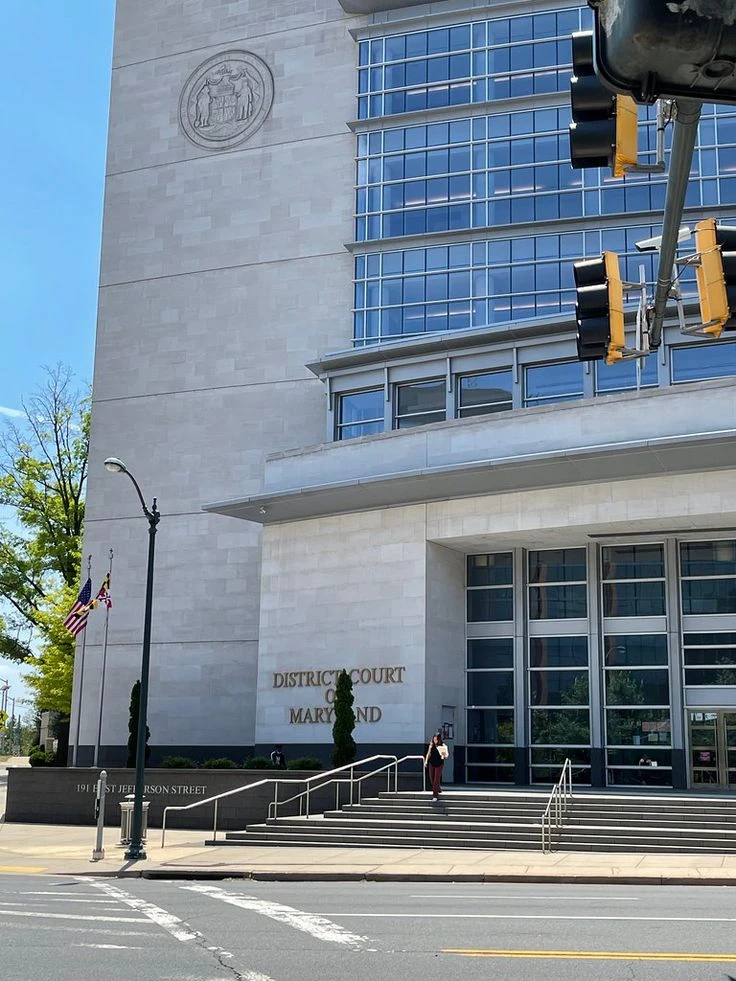
Image on Pinterest
Why Fathers Day 2026 Is the Right Moment for This Conversation
Fathers Day 2026 falls on Sunday, June 21, and or most families, it is a day of cards and meals and small gestures. For adult children watching their fathers age without a plan in place, it is something more urgent than that.
The timing is not arbitrary. Estate planning conversations are consistently harder to start than to finish. Most adult children already know this needs to happen. What they lack is a natural entry point, a moment that makes the conversation feel like an act of love rather than a reminder of mortality. Fathers Day 2026 is that moment, and a consultation with an estate planning professional is not a morbid gift. It is the one gift that actually protects everything your father built.
The data confirms how widespread this gap is. According to a Caring.com 2022 Wills Survey, 40% of Americans without a will simply have not gotten around to it. A 2020 Gallup poll found that only 46% of U.S. adults have a last will and testament, including just 53% of Americans between the ages of 50 and 64. That means roughly half of the fathers in that age group have no documented plan for the assets they leave behind.
In Maryland specifically, the risk carries an additional weight. Maryland is the only state in the country that imposes both an estate tax and an inheritance tax. According to Maryland tax law analysis updated in March 2026, only about 32% of Americans have a will, leaving the vast majority of Maryland residents exposed to a dual-tax system that a properly structured estate plan can significantly reduce.
What Happens to Dad’s House in Maryland Without a Will?
For most Maryland fathers, the family home is the largest single asset they own, and it is also the asset most vulnerable to intestacy.
If your father owns his home outright and dies without a will, that property enters probate. The court appoints a personal representative, following a statutory priority list beginning with the surviving spouse, then adult children, then parents, then siblings, and the administration process begins. The home cannot be sold, transferred, or refinanced while the estate is open. Creditors have up to three years from the date of death to file claims under Maryland law, meaning the family may wait years before the full distribution is final.
If your father owns the home as a tenant in common with another person, his share goes through probate. If he owns it as a joint tenant with right of survivorship, it passes to the co-owner outside of probate, but only in that specific arrangement, and only to that co-owner. Stepchildren are not considered legal heirs under Maryland intestacy law unless they were legally adopted, regardless of how long your father raised them or what his actual wishes were.
The practical outcome for a typical Maryland family can mean twelve months or more of restricted access to the most valuable thing their father left them, combined with legal fees, court costs, and probate expenses that Maryland attorneys estimate at 3–8% of total estate value.
Will vs. Revocable Living Trust: Which One Does Your Father Actually Need?
This is the question most families get stuck on, and both documents have real value, but, for a Maryland father who owns a home, has financial accounts, and wants his wishes carried out cleanly and privately, they are not equivalent tools.
Option 1: A Last Will and Testament
A will is a legal document that records your father’s instructions for distributing his assets after death. It names his beneficiaries, appoints a personal representative (executor) to manage the estate, and, critically for fathers with younger children or grandchildren, designates a guardian for any minors. In Maryland, a valid will must be written, signed by the person making it, and witnessed by two people.
What a will does not do is avoid probate, and once your father dies, the will is submitted to the Register of Wills in his county, and the court-supervised probate process begins. The contents of his estate, the value of his assets, and the distribution plan all become public record. The process is transparent, legal, and orderly, and it takes time, costs money, and removes privacy at the exact moment his family needs it most.
Option 2: A Revocable Living Trust
A revocable living trust is a legal entity your father creates during his lifetime. He transfers ownership of his assets; his home, his accounts, his investments, into the trust, names himself as the initial trustee so he retains full control, and designates a successor trustee to take over when he dies or becomes incapacitated. Because the trust owns the assets rather than your father as an individual, those assets pass directly to his named beneficiaries without any court involvement.
According to the Maryland Register of Wills’ official guide to revocable trusts, a properly funded trust can minimize or avoid probate for any assets transferred into it during the grantor’s lifetime, and it keeps the details of your father’s estate entirely out of the public record. He can modify, amend, or revoke the trust at any time while he is alive and mentally competent. He loses no control, he gains an infrastructure.
The cost is real but proportionate, and according to SimplyTrust’s Maryland analysis updated April 2026, attorney-drafted revocable living trusts in Maryland cost between $4,250 and $6,375. Against a probate process that typically consumes 3–8% of estate value on a standard Maryland home, the math favors the trust for most families in Anne Arundel County and beyond.
The right choice depends on your father’s specific situation, the nature of his assets, his family structure, and his goals. T-Bridge Finance LLC helps Maryland families work through this decision with clarity, not pressure.
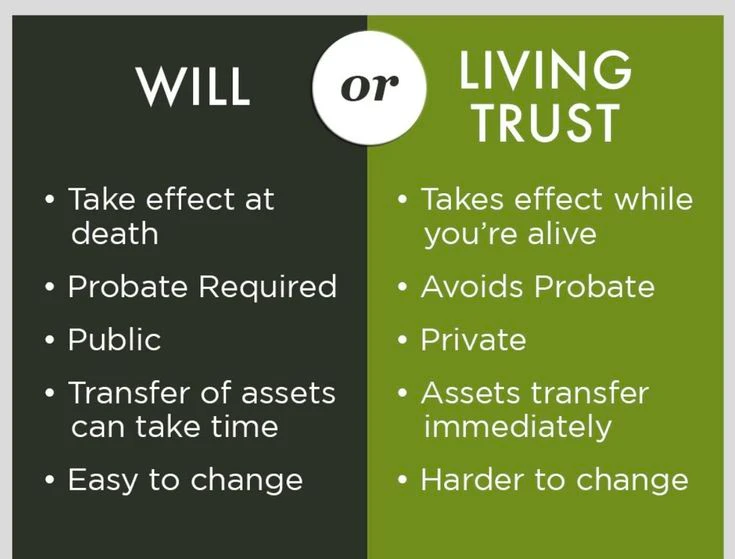
Image on Pinterest
How to Start the Conversation With Your Father This Fathers Day 2026
The hardest part of estate planning for most families is not the paperwork, it is the conversation. Adult children worry about sounding alarmist, or morbid, or presumptuous. Fathers sometimes interpret the question as an intrusion, or as a signal that their children are thinking about inheritance rather than protection.
The key is to start with logistics, not mortality. Ask your father where he keeps important documents, not what he plans to leave you. Ask whether anyone in the family would know who to call or what to do if something happened. Ask whether his existing plan; if he has one, still reflects his current wishes after the changes life has brought since he last looked at it.
According to financial planning guidance from Benzinga’s analysis of Fidelity’s Family and Finance Study, about 68% of parents with estate plans have never told their adult children what those plans contain. The conversation gap is as dangerous as the planning gap. Fathers Day 2026 is a natural, low-pressure moment to close both.
Frame the estate planning consultation as the gift itself. You are not telling your father he is old, you are telling him that what he built matters enough to protect properly.
What To Know About Maryland’s Dual-Tax Risk
Maryland carries a unique burden that most estate planning content ignores, it is the only state in the United States that levies both an estate tax and an inheritance tax, creating a compounding liability for estates that are not structured correctly.
As of 2026, property passing to a spouse, parent, grandparent, sibling, step-parent, step-child, or lineal descendant is entirely exempt from Maryland’s inheritance tax. But property passing to nieces, nephews, cousins, unmarried partners, or close friends is subject to it, regardless of how close that relationship was in life. Maryland’s inheritance tax generates approximately $75 million annually and remains fully in effect for 2026.
A revocable living trust does not eliminate Maryland’s estate tax by itself, that requires additional planning layers for larger estates. But it does ensure that assets reach the right people in the right structure, reducing the exposure created by improper titling, missing beneficiary designations, and the intestacy default that affects families with no plan at all.
T-Bridge Finance LLC works with Maryland families specifically on this intersection of tax planning, estate structure, and trust services, making sure the plan your father leaves behind is one the state cannot easily diminish.
Give Your Father a Gift That Protects Everything He Built
Fathers Day 2026 is June 21, and if your father has no will, no trust, and no beneficiary strategy in place, the timeline to fix that is now, not after the holiday, not next year.
T-Bridge Finance LLC provides trust and estate planning services for families across Anne Arundel County and Maryland. Dr. Taiwo Akindahunsi and the team work with adult children and their parents to build estate plans that reflect real family circumstances, protect real assets, and hold up under Maryland law.
To schedule an estate planning consultation before Fathers Day 2026, reach out to T-Bridge Finance LLC. This is the most meaningful conversation your family can have this June.
About the Author
Maxwell is a financial content strategist at T-Bridge Finance LLC, a financial services firm based in Bowie, Maryland. All articles published on this blog are reviewed by the licensed PROFESSIONALS at T-Bridge Finance LLC before publication to ensure accuracy and compliance with current insurance and financial guidelines. T-Bridge Finance LLC holds active insurance licenses and serves families across the United States with life insurance, estate planning, college funding, and tax-advantaged wealth strategies. schedule a free consultation.
FAQ
1. When is Fathers Day 2026?
Fathers Day 2026 falls on Sunday, June 21. The weeks leading up to this date represent the most active search period for estate planning resources on behalf of fathers, making it the ideal window to schedule a consultation.
2. What happens if a father dies without a will in Maryland?
If a father dies without a will in Maryland, his estate is distributed according to the state’s intestate succession laws under the Maryland Estates and Trusts Code. The court appoints a personal representative, the estate enters probate, and assets are distributed based on legal family relationships, not the father’s actual wishes. The process typically takes nine to twelve months.
3. Is a revocable living trust better than a will for a Maryland father?
For Maryland fathers who own real estate or multiple financial accounts, a revocable living trust typically offers stronger protection than a will alone. A trust bypasses probate, keeps the estate out of public record, and allows assets to transfer directly to beneficiaries. A will remains useful for naming guardians for minor children and catching assets not transferred to the trust.
4. How much does probate cost in Maryland?
Maryland probate costs are typically estimated at 3–8% of total estate value in legal fees, court costs, and administrative expenses. For an estate that includes a family home in Anne Arundel County, that figure can reach tens of thousands of dollars, in addition to a nine-to-twelve-month delay in asset distribution.
5. Can I set up an estate planning consultation as a Fathers Day 2026 gift?
Yes. A scheduled consultation with an estate planning professional is one of the most practical and meaningful Fathers Day 2026 gifts an adult child can give. T-Bridge Finance LLC offers estate planning consultations for Maryland families across Anne Arundel County and the broader DMV region. You can schedule directly through the firm’s website.
6. Does Maryland have both an estate tax and an inheritance tax?
Yes. Maryland is the only state in the United States that imposes both an estate tax and an inheritance tax. As of 2026, Maryland’s inheritance tax applies to assets passing to non-exempt beneficiaries such as nieces, nephews, and unmarried partners, while the estate tax applies to estates above the Maryland exemption threshold.
Disclaimer: The information in this article is for educational purposes only and does not constitute financial, legal, or insurance advice. Life insurance and financial products vary by carrier, state of residence, age, health profile, and individual circumstances. Past index performance does not guarantee future results. Cash value illustrations referenced in this article are hypothetical projections and not a guarantee of policy performance. T-Bridge Finance LLC is a licensed financial services firm operating in the United States. Please consult a licensed financial advisor or insurance professional before making any insurance or financial planning decisions. To speak with our team, contact us here.