Final expense insurance pays a tax-free lump sum of $5,000 to $25,000 straight to your named beneficiary within 24 to 72 hours after claim approval. This cash covers the current median U.S. funeral cost of $8,300 plus extras like cremation, flowers, or travel so your family avoids financial stress during a tough time.

Image on Pinterest
Introduction
If you are thinking about final expense insurance, you are not alone. Many people in their 50s, 60s, and beyond want a simple way to make sure their loved ones do not face a big bill when the time comes. Final expense insurance is a type of life insurance built exactly for that. It pays a tax free lump sum straight to your family so they can handle funeral costs without stress.
In this guide we break down exactly how final expense insurance works in 2026, what it covers, how much you need, and why it stands out from other options. We keep things straightforward so you can decide with confidence.
Related Blog Posts
IUL VS TERM LIFE INSURANCE 2026: PROTECTION AND WEALTH
WHAT IS INDEX UNIVERSAL LIFE INSURANCE
FINAL EXPENSE INSURANCE VS TRADITIONAL LIFE INSURANCE
How Does Final Expense Insurance Cover Funeral Costs?
Final expense insurance, also called burial insurance or final expenses life insurance, gives your family cash when you pass. The payout usually ranges from $5,000 to $25,000. Most policies pay within days of receiving the death certificate. Your beneficiary gets the money with no strings attached. They can use it for the funeral home, cremation, burial plot, or any other final expenses.
The average funeral with viewing and burial sits at $8,300 according to the National Funeral Directors Association data referenced across 2025 reports, which remains the most cited median figure entering 2026. Cremation runs lower at about $6,280. Either way, the numbers add up fast when emotions run high. Final expense insurance steps in so your family avoids dipping into savings or taking loans.

Image on Pinterest
What exactly does final expense insurance pay for?
Final expense insurance pays a tax free death benefit directly to the person you name. That money covers the median US funeral cost of $8,300 plus extras like flowers, transportation, obituary notices, and even leftover medical bills. Because the cash goes to your beneficiary and not the funeral home, your family keeps full control. They decide how every dollar gets spent.
Funerals involve many moving parts. There is the service itself, the casket or urn, transportation for family members, and sometimes a reception afterward. Without planning, these costs can catch everyone off guard. Final expense insurance removes that worry by delivering usable cash right when it is needed most.
Many families also use part of the benefit to handle any remaining hospital bills or credit card balances from the final days. The flexibility here is one of the biggest reasons people choose final expense insurance over locked in preneed contracts.
How much does the average US funeral cost in 2026?
Right now the national median for a traditional funeral with viewing and burial stands at $8,300. Cremation with basic services averages $6,280. These figures are drawn from the NFDA 2023 General Price List Study, which remains the most widely cited benchmark for funeral cost data entering 2026 as no newer comprehensive study has been published. Prices vary by state and choices, but the point stays the same. Without planning, your family could face a surprise bill they never expected.
For example, adding a vault or cemetery plot can push the total well over $10,000 in many areas. In high cost states the numbers climb even higher. That is why so many people turn to final expense insurance to lock in protection at an affordable monthly rate.
Cremation rates continue to rise too. The NFDA 2025 Cremation & Burial Report projects the U.S. cremation rate at 63.4 percent for 2025, more than double the burial rate of 31.6 percent. Even with lower cremation costs, the overall expense still requires thoughtful planning. Final expense insurance works equally well for either choice.
How quickly does the insurance pay the beneficiary?
Most final expense life insurance policies pay the full amount within 24 to 72 hours after the insurance company receives the death certificate and claim form. Some carriers even offer same day processing for electronic claims. That speed matters when funeral homes often ask for payment upfront.
The process is simple. Your family contacts the carrier, submits the paperwork, and the check arrives fast. No long delays like you sometimes see with larger life insurance policies. This quick turnaround is one of the top reasons final expense insurance earns high marks from families who have used it.
Is final expense insurance the same as burial insurance?
Yes. People use the terms final expense insurance, final expenses insurance, burial insurance, and burial insurance life policy to mean the same product. All deliver a small permanent life insurance benefit meant for end of life costs. The name changes but the purpose stays rock solid.
What are the pros and cons compared to term life or savings?
Final expense insurance offers guaranteed acceptance for many seniors and fixed premiums that never rise. You skip the medical exam in most cases. The downside is smaller coverage amounts compared to term life. Still, it beats scrambling to pay cash from savings when grief hits.
Key highlights:
- No medical exam options available for ages 50 plus
- Premiums stay level for life Fast payout to family
- Covers exactly the $8,300 average funeral cost most families face.
Term life insurance might give bigger coverage but it expires after a set number of years and often requires health questions. Savings accounts sound good until you realize how quickly life savings can shrink with one unexpected event. Final expense insurance sits right in the middle as a practical, permanent solution.
How do I choose the right coverage amount?
Experts recommend $10,000 to $15,000 for most people. That amount handles the $8,300 median funeral plus extras like cemetery fees or a small memorial service. If you live in a high cost area or want extra breathing room, bump it to $20,000 or $25,000. The policy stays affordable because the face amount is modest.
Take a moment to look at your own situation.
- Do you have specific wishes for a viewing or cremation?
- Do family members live far away and need travel money?
Factor those in when picking your coverage level. Most carriers let you adjust the amount during the application process.
How final expense insurance differs from preneed plans
Preneed plans lock you into one funeral home and specific services. Final expense insurance gives cash flexibility. Your family can shop around or choose cremation even if you planned otherwise. Plus, if the funeral home goes out of business, your cash benefit still arrives safely.
This difference matters more than many people realize. Funeral homes sometimes change ownership or close. With final expense insurance you keep options open while still protecting your loved ones.
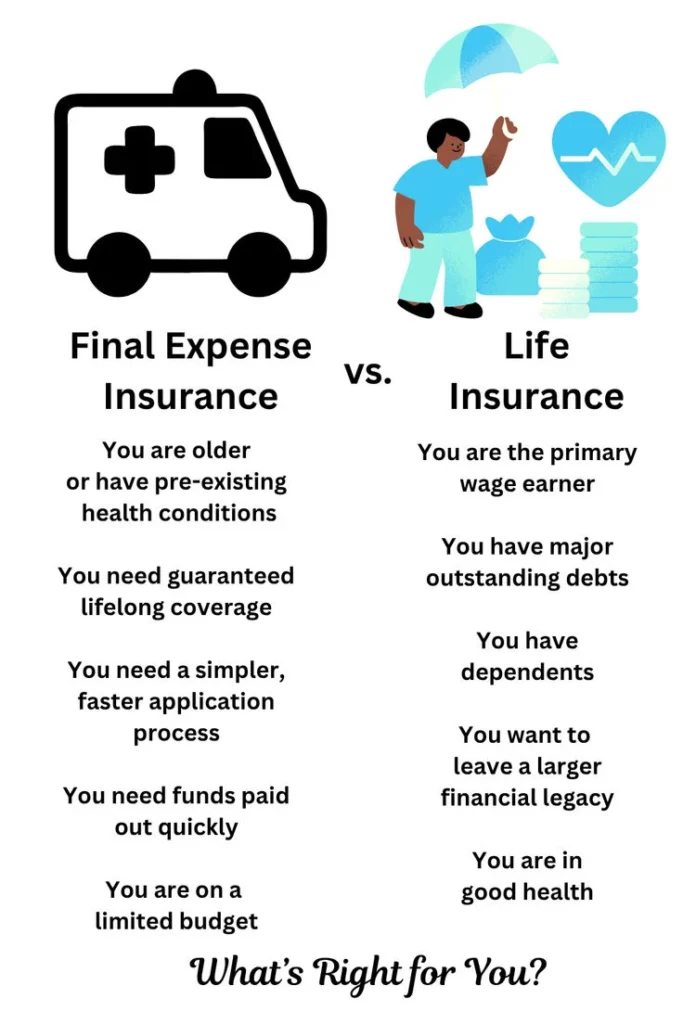
Image on Pinterest
Who should consider final expense insurance right now?
Anyone over age 50 who wants to spare their family from financial pressure should look closely at final expense insurance. It works especially well for people who may not qualify for larger life policies because of health conditions. The simplified application process makes it accessible.
Younger folks in their 40s sometimes buy it too if they have aging parents or want to cover their own end of life costs early while rates are lower. The key is matching the policy to your personal goals and budget.
How to apply for final expense insurance in simple steps
- First, decide on your coverage amount and gather basic personal information.
- Next, choose a reputable carrier or work with an independent agent who shops multiple companies.
- Fill out the short application, usually just a few health questions.
Once approved, your policy starts right away and premiums lock in.
The whole process often takes less than 30 minutes online or over the phone. No doctor visit required in most cases. That speed and ease is why final expense insurance has grown so popular.
What to look for when comparing policies
- Compare monthly premiums, payout speed, and any waiting periods.
- Read the fine print on contestability and grace periods.
- Ask about guaranteed issue versus simplified issue options. A good policy will feel straightforward and give you confidence that your family will be taken care of.
At T-Bridge Finance LLC we help clients compare options side by side so you pick the best fit without pressure.
Conclusion
Final expense insurance delivers peace of mind by covering funeral costs exactly when your family needs it most. Whether you call it final expense insurance, final expense life insurance, burial insurance, or any similar name, the result is the same. Your loved ones get quick cash to handle the $8,300 average bill without added worry.
Ready to protect your family? Contact T-Bridge Finance LLC today for a free quote on final expense insurance that fits your budget and goals. Our team makes the process simple and friendly.
Read More: WHAT IS INDEX UNIVERSAL LIFE INSURANCE
About the Author
Maxwell is a financial content strategist at T-Bridge Finance LLC, a financial services firm based in Bowie, Maryland. All articles published on this blog are reviewed by the licensed advisors at T-Bridge Finance LLC before publication to ensure accuracy and compliance with current insurance and financial guidelines. T-Bridge Finance LLC holds active insurance licenses and serves families across the United States with life insurance, estate planning, college funding, and tax-advantaged wealth strategies. schedule a free consultation.
FAQs
1. What is the waiting period for final expense insurance?
Most level benefit policies pay immediately upon approval. Graded plans may limit benefits in the first two years for natural causes, but accidental death pays full from day one.
2. Does final expense insurance cover cremation?
Yes. The cash benefit works for any funeral choice including cremation, burial, or green options. Your family decides how to use the money.
3. Can I get final expense insurance with health issues?
Absolutely. Many carriers offer simplified issue plans that ask only a few health questions and accept most applicants over age 50.
Disclaimer: The information in this article is for educational purposes only and does not constitute financial, legal, or insurance advice. Life insurance and financial products vary by carrier, state of residence, age, health profile, and individual circumstances. Past index performance does not guarantee future results. Cash value illustrations referenced in this article are hypothetical projections and not a guarantee of policy performance. T-Bridge Finance LLC is a licensed financial services firm operating in the United States. Please consult a licensed financial advisor or insurance professional before making any insurance or financial planning decisions. To speak with our team, contact us here.




Pingback: Long Term Care Insurance vs Medicaid in 2026 (Costs, Rules and Smart Strategies) - T-Bridge Finance LLC