Image on Pinterest
You set up your trust, signed the documents, paid the attorney, and walked away believing your home, your accounts, and your vehicles were finally protected from probate. If the property title was never formally changed to reflect the trust as the legal owner, none of that protection is real. A trust without properly titled assets is, under the law, an empty container, and everything you intended to protect will still pass through the courts when you die.
This is not a hypothetical risk, it is one of the most common and most preventable estate planning failures in the United States, and it happens to people who did everything else right.
This guide explains exactly what property title in a trust means, how to retitle your home, financial accounts, and vehicles with the correct legal language, which property title mistakes silently void your trust’s protection, and what your family can do if an error surfaces after the grantor has died. T-Bridge Finance LLC and its founder, Dr. Taiwo Akindahunsi, address these exact property title questions every day as part of the firm’s trust planning services, and the guidance below reflects what consistently works in practice.
Related BlogPost
REVOCABLE LIVING TRUST: SAVE YOUR HOME (BEFORE IT’S TOO LATE)
ESTATE TAX CHANGES 2026: HNW FAMILIES GUIDE
2026 COMPLETE FINANCIAL PLANNING GUIDE (INSURANCE, COLLEGE, ESTATE, TAXES AND RETIREMENT)
MORTGAGE PROTECTION INSURANCE: 2026 SPRING HOMEBUYER GUIDE
What Does Property Title in a Trust Actually Mean?
Property title is the legal record of who owns a specific asset. When a property title shows your personal name as the owner, the law treats that asset as yours as an individual, and it is subject to probate at your death regardless of what your trust document says. When the property title is changed to reflect the trustee in their official capacity as the legal owner, the asset is inside the trust and passes to your beneficiaries without court involvement.
This is where most people misunderstand how trusts work; a trust is not a legal entity capable of holding property title in its own name, rather, a trust is a legal relationship, not a legal person, and property cannot belong to a relationship. What people mean when they say an asset is “in the trust” is that the property title has been transferred to the trustee to be held in trust for the benefit of the named beneficiaries. That distinction is not a technicality, it determines whose name must appear on every deed, account record, and vehicle title for the protection to be legally complete.
The standard form for a correctly titled trust asset reads: “[Trustee Full Name], as Trustee of the [Full Trust Name] dated [Trust Creation Date].” Every element of that phrase carries legal weight, and omitting any one of them can create ambiguity at exactly the moment your family needs clarity most. A deed that names only “The Smith Family Trust” without a trustee designation may not be legally sufficient in many states, because the trust itself cannot accept a property title transfer.
The property title question is therefore not a paperwork formality, it is the functional test of whether a trust does anything at all.
How to Retitle Your Home in a Trust
Your home is almost certainly the highest-value asset in your estate, and it is also the asset where a missing property title transfer carries the largest consequence. Signing the trust document is not enough to move a home into the trust. A new deed must be prepared, notarized, and recorded before the property title legally changes hands.
The deed must identify three things with precision: your full legal name in your capacity as trustee, the complete name of the trust exactly as it appears in the trust instrument, and the date the trust was created. A correctly written grantee line looks like this:
"John B. Smith, as Trustee of the John B. Smith Revocable Living Trust, dated March 1, 2023."
Once the deed is signed and notarized, it must be recorded with the county recorder or register of deeds in the county where the property is located. Recording is what makes the property title change official in the public record, and the public record is what governs legal ownership. Recording fees vary by county but typically range from ten to one hundred dollars, and the process does not require notifying the lender in advance for most primary-residence transfers.
Under the Garn-St Germain Depository Institutions Act of 1982 (12 U.S.C. 1701j-3), a lender cannot accelerate a mortgage or call the loan due solely because the borrower transfers the property title of a primary residence into a revocable living trust in which the borrower remains a beneficiary and continues to occupy the home. That is a federal right, not a courtesy, and lenders cannot override it.
Some estate planning attorneys also recommend including language referencing successor trustees or subsequent amendments to the trust instrument in the deed’s grantee line, particularly for trusts that have been amended since their original formation. Your attorney’s preference and the customs of your state should guide the final language, but the core three elements described above must appear in every property title transfer of this kind.
Why a Quitclaim Deed Works for Most Trust Property Title Transfers
A quitclaim deed releases the grantor’s personal interest to the trustee without making any warranty about the property’s title history. This works cleanly when the person transferring the property title is also the person receiving it in their trustee capacity, because there is no third-party buyer who needs warranty protection. Quitclaim deeds are efficient, widely accepted, and appropriate for the vast majority of primary-residence trust property title transfers across the country.
When a Warranty Deed Makes More Sense for a Trust Property Title Transfer
A grant deed or general warranty deed provides additional assurances about the quality of the title being transferred and may be preferred for investment properties, properties with complex ownership histories, or situations where local recording practices favor warranty language. Either deed type accomplishes the property title transfer when prepared and recorded correctly, and the choice between them should reflect your attorney’s advice and your state’s conventions rather than a general rule.
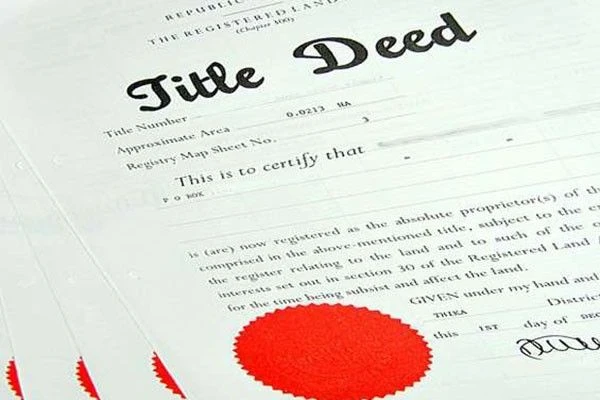
Image on Pinterest
How to Retitle Bank and Brokerage Accounts in a Trust
Financial account property title changes follow the same underlying principle as real estate transfers, but the mechanism is different. There is no deed, instead, the account holder contacts the financial institution directly and requests a change of ownership to reflect the trustee in their official capacity. The institution processes this internally and updates the account title on its records.
The new account property title should read exactly as the grantee line on a deed would:
"[Trustee Name], Trustee of the [Trust Name] dated [Date]."
Every statement and correspondence from the institution should reflect that new property title going forward. Checking accounts, savings accounts, money market accounts, certificates of deposit, and taxable brokerage accounts can all be retitled in this way.
What Is a Certificate of Trust and Why It Matters for Account Property Title Changes
Most financial institutions will request documentation before processing any property title change on an account. Many people assume they need to hand over the entire trust document, which can be forty pages or more, but this is almost never required and is generally inadvisable because the full instrument contains private distribution terms that a bank does not need to see.
A certificate of trust is a condensed version of the trust, typically two to four pages in length, that confirms the trust exists, names the current and successor trustees, summarizes the trustee’s powers, and provides the trust’s creation date. Most banks and brokerage firms will accept a certificate of trust in place of the full instrument when processing a property title change. Some states have statutory certificate of trust forms that make institutional acceptance even faster and more predictable.
One critical exception applies to retirement accounts. An IRA, 401(k), or other qualified retirement account should not be retitled into a trust, because doing so is treated as a distribution under IRS Publication 590-B and the entire account balance may become taxable in the year of transfer. For retirement accounts, the correct approach is to name the trust as the beneficiary, not to change the property title.
T-Bridge Finance LLC works with clients to coordinate beneficiary designations across retirement accounts as part of a comprehensive trust funding review, because confusing these two steps is one of the most expensive mistakes in the property title transfer process.
Should You Put a Vehicle’s Property Title in Your Living Trust?
Vehicle property title is managed through each state’s Department of Motor Vehicles, and the rules vary more between states than most people realize. In the majority of states, vehicles do not need to be retitled into a living trust to avoid probate at death, because simplified successor affidavit procedures allow a surviving family member to claim vehicle ownership without court involvement.
That said, high-value collectible vehicles, classic cars, or commercial vehicles whose value exceeds a state’s simplified transfer threshold may benefit from having the property title placed inside the trust. The process mirrors the real estate approach: the owner requests a new certificate of title from the state DMV naming the trustee in their official capacity, and the property title language follows the same structure used for deeds and accounts.
Before changing any vehicle’s property title, the owner should also contact their auto insurer. An insurance policy written in the owner’s personal name may not automatically cover a vehicle whose property title now belongs to the trust, and updating the policy to name the trust as an additional insured addresses that gap before a claim ever arises.

Image on Pinterest
The Seven Property Title Mistakes That Leave Assets Outside the Trust
The single most damaging error in trust planning is one of the simplest, it is the failure to complete the property title transfer at all. An attorney drafts the trust, the client signs it, and both parties walk away believing the job is done. The trust document itself transfers nothing, however, and without a separately recorded deed or an account retitling, the property title remains in the grantor’s personal name regardless of what the trust document says.
These are the seven property title mistakes that T-Bridge Finance LLC and Dr. Taiwo Akindahunsi most consistently see derail otherwise well-constructed estate plans.
The first mistake is failing to record the deed after executing it. A signed deed that sits in a drawer without being recorded at the county recorder’s office does not change the property title in the public record, and the public record is what governs legal ownership at death.
The second mistake is omitting the trust creation date from the grantee line on the deed. Without the date, identifying which trust holds the property title becomes legally ambiguous, particularly if the grantor has amended the trust since its original formation.
The third mistake is using only the trust name without naming a trustee in their official capacity. A deed that reads only “The Smith Family Trust” without naming a specific trustee may not be legally sufficient, because the trust cannot accept a property title transfer in its own name.
The fourth mistake is forgetting to retitle newly acquired property. Any real estate purchased after the trust was created must be titled directly in the trust from the moment of purchase, or a new deed must be recorded transferring the property title to the trust shortly afterward. Many families discover this gap when a second home or rental property surfaces during the estate administration process and no property title transfer was ever completed.
The fifth mistake is allowing a refinance to pull the property out of the trust without retransferring the property title afterward. This is addressed in detail in the next section, but it is worth naming here because it is the single most frequent way a correctly funded trust becomes an unfunded one.
The sixth mistake is retitling a retirement account instead of naming the trust as beneficiary, which triggers a taxable distribution and achieves the opposite of what the grantor intended.
The seventh mistake is assuming that a pour-over will solves a property title problem while the grantor is still living. A pour-over will is a valuable safety net, but it sends assets through probate first and then into the trust, which is precisely the outcome the trust was designed to avoid.
The Refinance Property Title Trap and How to Fix It
A mortgage refinance is one of the most reliable ways for a correctly funded trust to quietly lose its protection without anyone noticing. When a lender processes a refinance, it often requires that the property title be transferred back into the borrower’s personal name as a condition of the new loan. The loan closes, the grantor receives a new rate and payment schedule, and then everyday life resumes, often without anyone returning to the attorney’s office to re-execute and re-record the deed.
The result is a trust that was correctly funded at creation, maintained that correct property title for years, and is now silently unfunded because of a routine financial transaction. The grantor may never realize this has happened.
The corrective action is straightforward. Immediately after any refinance, the grantor should execute a new deed returning the property title to the trust, have it notarized, and record it with the county recorder. Federal law under the Garn-St Germain Act prevents the lender from calling the loan due because of this property title re-transfer, so there is no legal risk in acting promptly. The mortgage servicer should also be notified in writing so their records reflect the current property title holder.
If the refinance occurred months or years ago and the property title was never returned to the trust, the correction is exactly the same: a new deed, notarized and recorded. The delay does not create a legal barrier, only a gap in the trust’s history of being fully funded. Addressing it now is always better than leaving it for the next generation to untangle.
Who to Notify After You Change the Property Title on a Trust Asset
Notifying the carrier proactively and requesting that the trust be named as the insured or as an additional named insured costs nothing and eliminates that risk. Most carriers process this change without additional premium.
The HOA must be informed if the property is governed by a homeowner’s association. Many HOA governing documents include specific provisions about trust ownership and require written notice when a property title changes hands, even when the grantor continues to occupy the home as before.
The mortgage servicer should receive a written notice that the property title has been transferred to the trust, along with a copy of the recorded deed. Although the lender cannot take adverse action based on this property title transfer under federal law, keeping the servicer’s records current prevents confusion if the loan is sold to another servicer or if the property is refinanced again in the future.
Title insurance coverage should also be reviewed. Most owner’s title insurance policies transfer automatically when the property title is re-recorded through a deed from the grantor to themselves as trustee, but confirming this with the title company takes one phone call and eliminates any ambiguity.

What Happens When a Property Title Error Is Found After the Grantor Dies?
Options narrow considerably when a property title error surfaces after the grantor has passed away. In most cases, assets cannot be added to a trust after the trust creator’s death, because that event causes the trust to become irrevocable and its terms to become fixed. A successor trustee cannot simply correct the property title by executing a new deed on the grantor’s behalf, because the authority to do so expired at death.
The most practical safety net in this situation is a pour-over will. When a grantor creates a living trust, a well-drafted estate plan also includes a pour-over will, which directs any assets held outside the trust at death to be transferred through probate and then into the trust. This approach preserves the grantor’s distribution intentions but does not avoid probate for the assets in question. The pour-over will catches the asset and routes it correctly, but the family still bears the cost, the time, and the public exposure of a court proceeding.
Some states provide additional remediation through court petition procedures that allow a successor trustee to ask a judge to recognize an asset as belonging to the trust based on the grantor’s clearly expressed intent in the trust document, even if the formal property title transfer was never completed. These procedures are state-specific, not universally available, and require qualified legal counsel to pursue. Their outcome is never guaranteed, and the legal fees involved can rival or exceed the cost of avoiding the probate that the trust was originally designed to sidestep.
The strongest argument for addressing any property title issue immediately is that the correction takes a new deed, a notary, and a filing fee when the grantor is alive. It takes attorneys, court petitions, and months of waiting when the grantor is gone.
T-Bridge Finance LLC includes a property title verification review as part of every trust planning engagement. Dr. Taiwo Akindahunsi and the team work directly with clients and coordinate with their estate planning attorneys to confirm that every intended asset has a properly recorded property title transfer behind it and that the trust holds what the grantor believes it holds.
Schedule a Conversation with T-Bridge Finance LLC
A properly drafted trust with an incomplete property title record is one of the most preventable failures in estate planning. The mechanics of correct property title transfer are straightforward, but the details require attention, and the consequences of missing them can cost a family months of probate delays and thousands of dollars in legal fees.
T-Bridge Finance LLC offers trust planning services that include property title guidance as part of a complete, coordinated estate strategy. Dr. Taiwo Akindahunsi works directly with clients and their estate attorneys to confirm that every intended asset carries the properly recorded property title documentation needed to make the trust function as designed, not just on paper but in practice.
Schedule a conversation with the T-Bridge Finance LLC team, and take the first step toward confirming that your trust holds exactly what you believe it holds.
About the Author
Maxwell is a financial content strategist at T-Bridge Finance LLC, a financial services firm based in Bowie, Maryland. All articles published on this blog are reviewed by the licensed PROFESSIONALS at T-Bridge Finance LLC before publication to ensure accuracy and compliance with current insurance and financial guidelines. T-Bridge Finance LLC holds active insurance licenses and serves families across the United States with life insurance, estate planning, college funding, and tax-advantaged wealth strategies. schedule a free consultation.
FAQ
1. Does signing a trust document automatically change the property title on my home?
No. Signing a trust document creates the legal structure of the trust but transfers no property into it. To change the property title on a home, a new deed must be prepared, notarized, and recorded with the county recorder in the county where the property is located. Until that deed is recorded, the property title remains in the grantor’s personal name and the home will be subject to probate regardless of what the trust document says.
2. Can a trust hold property title, or does the trustee hold it?
The trustee holds legal property title, not the trust itself. A trust is a legal relationship, not a legal entity capable of owning property. When an asset is said to be “in a trust,” what this means is that the property title has been transferred to the trustee to be held in trust for the benefit of the named beneficiaries. The deed, account record, or vehicle title must name the trustee in their official capacity, not just the trust name alone.
3. What happens to my mortgage if I transfer the property title into a living trust?
Under the federal Garn-St Germain Depository Institutions Act of 1982 (12 U.S.C. 1701j-3), a lender cannot accelerate a mortgage or call the loan due solely because a borrower transfers the property title into a revocable living trust in which the borrower remains a beneficiary and continues to occupy the home. You should notify your mortgage servicer after recording the new deed, but the property title transfer itself is legally protected under federal law.
4. My bank says they need the full trust document to retitle my account. Is that accurate?
Not necessarily. Most financial institutions will accept a certificate of trust in place of the full trust document when processing a property title change for an account. A certificate of trust is a shortened summary of the trust, typically two to four pages long, that confirms the trust’s existence, names the trustee and their powers, and provides the trust’s creation date. If your bank insists on the full document, asking to speak with a trust officer who handles account property title changes regularly often resolves the issue quickly.
5. What is the biggest property title mistake people make when they create a living trust?
The most common and most damaging mistake is simply not completing the property title transfer for every asset the trust was intended to hold. A trust that exists on paper but holds no assets with properly recorded property title documentation is an unfunded trust. It provides no probate protection, no privacy, and no distribution control for any asset whose property title still shows the grantor’s personal name. The trust document and the property title transfer are two entirely separate steps, and both are required for the plan to work as designed.
Disclaimer: The information in this article is for educational purposes only and does not constitute financial, legal, or insurance advice. Life insurance and financial products vary by carrier, state of residence, age, health profile, and individual circumstances. Past index performance does not guarantee future results. Cash value illustrations referenced in this article are hypothetical projections and not a guarantee of policy performance. T-Bridge Finance LLC is a licensed financial services firm operating in the United States. Please consult a licensed financial advisor or insurance professional before making any insurance or financial planning decisions. To speak with our team, contact us here.