
Income protection insurance pays you a regular tax-free income if you cannot work due to illness or injury. In 2026 it replaces 50 to 70 percent of your earnings after a short waiting period so your family keeps paying bills and covering mortgage or rent without dipping into savings or going into debt.
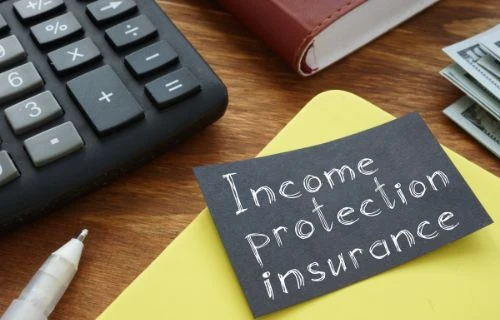
Image on Pinterest
Introduction
Life moves fast and none of us plans to get sick or hurt. Yet every year thousands of families face exactly that situation. Income protection insurance steps in to replace lost earnings so you do not lose your home or lifestyle. This guide breaks down real 2026 costs, shows exactly why every family needs income protection insurance today, and gives you simple steps to choose the best income protection insurance for your situation.
You will see clear numbers, easy explanations, and practical advice that actually helps. Income protection insurance is not just another policy. It is the one that keeps your family stable when health issues hit.
RELATED BLOG POSTS
DISABILITY INSURANCE: PROTECTING YOUR INCOME FROM THE UNEXPECTED
LONG TERM CARE INSURANCE VS MEDICAID IN 2026 (COSTS, RULES AND SMART STRATEGIES)
TOP 5 BENEFITS OF PERMANENT LIFE INSURANCE IN 2026 (FOR FAMILIES)
HOW FINAL EXPENSE INSURANCE COVERS FUNERAL COSTS (AND PROTECTS YOUR FAMILY)
What Is Income Protection Insurance and How Does It Work in 2026?
Income protection insurance gives you monthly payments if sickness or injury keeps you off work. It replaces between 50 and 70 percent of your gross income after a chosen waiting period of four, eight, thirteen, twenty-six or fifty-two weeks. Payments continue until you return to work, the policy ends, or you reach retirement age.
In 2026 most policies are flexible. You pick your own occupation cover so the insurer pays even if you cannot do your exact job. Premiums stay fixed or reviewable depending on the plan you choose. This type of cover works for employees, self-employed people, and even stay-at-home parents in some cases.
Many families ask what is income protection insurance exactly. It is income insurance protection that pays out when your regular paycheck stops. Unlike sick pay which runs out quickly, income protection insurance can last for years if needed. You decide the level of cover and the waiting period that fits your savings.
Why Does Every Family Need Income Protection Insurance Right Now?
Most families live close to their monthly income, and one serious illness or accident can wipe out savings in weeks. Income protection insurance protects the lifestyle you built together, it covers mortgage payments, groceries, school fees, and everyday bills so stress does not pile on top of health worries.
For more on how this pairs with other income safeguards, read our full guide DISABILITY INSURANCE: PROTECTING YOUR INCOME FROM THE UNEXPECTED.
According to the Council for Disability Awareness, the average long-term disability absence lasts nearly three years. For a worker earning $60,000 annually, that represents nearly $180,000 in lost income, a gap that savings accounts and employer sick pay rarely cover in full. Income protection insurance exists specifically to close that gap.
Think about a typical household with kids in school and a mortgage. If the main earner cannot work for six months, bills still arrive every month. Income protection insurance steps in and removes that financial pressure. It gives peace of mind so you can focus on getting better.
What Are the Real 2026 Costs of Income Protection for a Typical Family?
In 2026, individual income protection insurance premiums for a healthy 30-year-old non-smoker in a professional role typically start between $30 and $75 per month for a $2,000 monthly benefit with a 90-day elimination period. A 40-year-old in the same role pays roughly $60 to $130 per month depending on the benefit period and own-occupation definition selected.
Workers in manual or higher-risk occupations pay more. These figures vary by carrier, state of residence, and health history. A licensed independent advisor can pull multiple quotes to find the most competitive option for your specific situation.
Income protection insurance costs remain affordable compared to the protection it offers. Many families spend more on coffee each month than on a solid income protection policy. When you factor in the potential replacement of thousands in lost wages, income protection insurance delivers excellent value in 2026.
How Much Income Protection Cover Does My Family Actually Need?
Calculate your monthly outgoings first, add mortgage or rent, utilities, food, transport, childcare, and any loans, then subtract any sick pay or spouse income. Most experts recommend cover of 50 to 70 percent of your current take-home pay.
Income protection insurance cover should match your real life. List every essential expense and build the benefit amount around that. Families often underestimate how much they spend each month until they sit down and track it. Income protection insurance makes sure those numbers stay covered.
How Do I Choose the Best Income Protection Policy in 2026?
Start with your own occupation definition so the policy pays if you cannot do your current job. Choose a guaranteed premium if you want fixed costs that never rise. Pick a waiting period you can cover with savings or emergency fund.
Compare at least three providers. Check claim payout rates and financial strength ratings from AM Best. Look for carriers rated A or better. Read the definition of disability carefully; own-occupation policies pay if you cannot perform your specific job, while any-occupation policies require total inability to work in any capacity. Own-occupation is the stronger and recommended standard.
When looking for the best income protection insurance, focus on flexibility and reliability. Income protection policy features vary, so match them to your family needs. Income insurance protection should grow with you as your situation changes over time.

Image on Pinterest
Can Income Protection Cover Self-Employed Families or Non-Earners?
Yes. Self-employed people receive no employer-funded sick leave and do not qualify for employer group disability plans, which makes income protection insurance essential rather than optional for freelancers, contractors, and business owners.
Stay-at-home parents can add limited cover in some plans to help with childcare costs if the working partner falls ill. Speak to an adviser about joint or family options available in 2026.
Self-employed families face unique risks because there is no employer safety net. Income protection insurance fills that gap completely. It protects both the business income and the household budget at the same time.
How Does Income Protection Compare to Other Family Protection Policies?
Income protection insurance pays while you are unable to work, unlike life insurance which pays only on death or critical illness cover which pays a lump sum for specific conditions. Many families combine all three for complete protection.
For families exploring broader life cover options, check our guide TOP 5 BENEFITS OF PERMANENT LIFE INSURANCE IN 2026 (FOR FAMILIES).
Life insurance and critical illness handle worst-case scenarios. Income protection insurance handles the long recovery periods that can last months or years. Together they give full peace of mind.
Income protection insurance stands out because it provides ongoing monthly support rather than a one-time payout. This makes it unique among family protection products in 2026.

Image on Pinterest
Conclusion
Income protection insurance remains one of the smartest steps any family can take in 2026. It replaces lost income, protects your home, and removes money worries during tough health times. Real costs are affordable and the protection is powerful.
Do not wait until something happens. Review your family finances today and get personalised quotes for income protection insurance.
Ready to protect your income? Contact T-Bridge Finance LLC for a free, no-obligation review of your income protection insurance options today. Call us or book a quick call through our website.
Read More: LONG TERM CARE INSURANCE VS MEDICAID IN 2026 (COSTS, RULES AND SMART STRATEGIES)
About the Author
Maxwell is a financial content strategist at T-Bridge Finance LLC, a financial services firm based in Bowie, Maryland. All articles published on this blog are reviewed by the licensed advisors at T-Bridge Finance LLC before publication to ensure accuracy and compliance with current insurance and financial guidelines. T-Bridge Finance LLC holds active insurance licenses and serves families across the United States with life insurance, estate planning, college funding, and tax-advantaged wealth strategies. schedule a free consultation.
FAQ
1. What is income protection insurance exactly?
Income protection insurance pays a monthly tax-free benefit if you cannot work due to illness or injury, typically replacing 50 to 70 percent of your gross income. Payments continue until you return to work, the policy term ends, or you reach a pre-set retirement age.
2. How much does income protection insurance cost for a family in 2026?
Most families pay between $30 and $150 per month depending on age, occupation, benefit amount, and elimination period. A healthy 35-year-old non-smoker in a professional role can typically secure $2,500 in monthly benefit for under $75 per month. Exact premiums vary by carrier and state.
3. Is income protection insurance worth it for self-employed people?
Yes. Self-employed workers have no employer safety net and no access to group disability plans, making income protection insurance one of the most critical purchases for anyone running their own business or freelancing. It keeps both the household and business financially stable during extended recovery periods.
Disclaimer: The information in this article is for educational purposes only and does not constitute financial, legal, or insurance advice. Life insurance and financial products vary by carrier, state of residence, age, health profile, and individual circumstances. Past index performance does not guarantee future results. Cash value illustrations referenced in this article are hypothetical projections and not a guarantee of policy performance. T-Bridge Finance LLC is a licensed financial services firm operating in the United States. Please consult a licensed financial advisor or insurance professional before making any insurance or financial planning decisions. To speak with our team, contact us here.